
Sep 21, 2026Technical & Installation
How to Clean and Maintain Epoxy Color Sand Flooring
Learn how to clean and maintain epoxy color sand flooring, including curing, routine mopping, spill cleanup, scratch prevention, and maintenance for garages and commercial spaces.
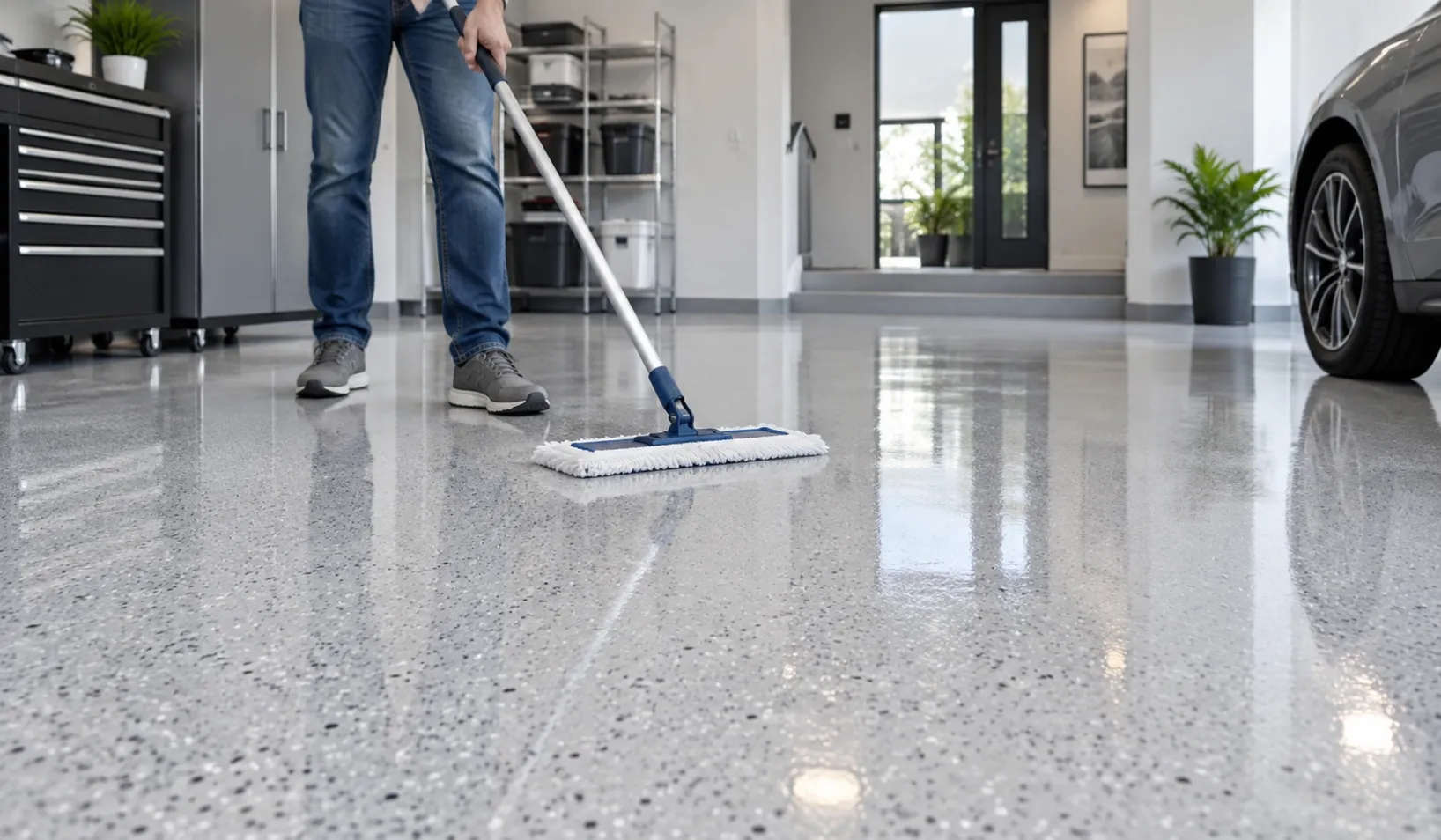
How to Clean and Maintain Epoxy Color Sand Flooring
One of the advantages of epoxy color sand flooring is that it creates a continuous, seamless surface that is relatively easy to clean and maintain.
Unlike tiled floors, there are no grout joints across the main surface to trap dust and dirt. Once properly cured, routine maintenance is usually straightforward.
However, good maintenance still matters.
The right cleaning habits can help preserve the appearance of the floor, reduce unnecessary wear, and keep the surface looking consistent in residential, commercial, and garage applications.
The basic maintenance principle is simple:
Remove dust regularly. Clean spills promptly. Use appropriate cleaning methods. Avoid unnecessary surface damage.
Why Seamless Flooring Is Easier to Maintain
Traditional tile floors contain many joints.
These joints can collect:
- Dust
- Dirt
- Water
- Oil
- Cleaning residue
Over time, they can become more difficult to clean than the tile surface itself.
Because the finished surface is seamless, routine sweeping and mopping can be simpler.
This is especially useful in:
- Garages
- Kitchens
- Shops
- Showrooms
- Offices
- Corridors
- Residential interiors
For commercial users, easier maintenance can also reduce the amount of time spent cleaning large floor areas.
Wait Until the Floor Has Cured
Cleaning should not begin too early.
A newly applied epoxy floor continues developing strength after the surface first appears dry.
- 4–6 hours: surface dry
- 24 hours: hard dry
- 48 hours: light pedestrian traffic
- 72 hours: vehicle traffic
During the initial curing period, the floor should remain protected.
Avoid washing the surface, dragging equipment, placing heavy objects, or allowing unnecessary traffic before the floor has reached the appropriate curing stage.
A floor that looks dry is not automatically ready for normal use.
Routine Dust Removal
Dust, sand, and small particles should be removed regularly.
Although epoxy color sand flooring is designed for good wear resistance, loose abrasive particles can still create unnecessary surface wear if they are repeatedly walked or driven over.
Routine cleaning can include:
- Soft broom sweeping
- Dust mopping
- Vacuuming
- Regular floor cleaning
The cleaning frequency depends on the environment.
A residential room may require only normal household cleaning, while a garage, retail store, or workshop may need more frequent dust removal.
How to Mop Epoxy Color Sand Flooring
For normal cleaning, use clean water or a suitable neutral floor cleaner.
A mop or soft floor-cleaning tool is normally sufficient for routine maintenance.
A simple process is:
Remove loose dust → Prepare cleaning solution → Mop the floor → Remove remaining residue → Allow the surface to dry
Avoid allowing dirty cleaning water to remain on the floor for long periods.
For larger commercial areas, standard floor-cleaning equipment may also be used when appropriate for the surface.
Use Neutral Cleaning Products for Routine Maintenance
For everyday maintenance, a neutral cleaner is the simplest choice.
Strong chemicals are usually unnecessary for normal dust, footprints, or household dirt.
Before using a new cleaning product across a large area, it is good practice to test it on a small, less visible section first.
This is especially useful when cleaning products contain:
- Strong solvents
- High concentrations of acids
- High concentrations of alkalis
- Unknown additives
The objective is to clean the floor without unnecessarily exposing the surface to aggressive chemicals.
Clean Spills Promptly
Even when a floor has good resistance to water and common stains, spills should still be cleaned as soon as practical.
This is particularly important in garages, kitchens, workshops, and commercial spaces.
Typical spills may include:
- Water
- Drinks
- Food residue
- Oil
- Mud
- Cleaning chemicals
Prompt cleaning helps keep the surface looking consistent and reduces the possibility of residue being spread across the floor.
For oily spills, first remove as much material as possible before completing normal cleaning.
Cleaning Garage Floors
Common garage dirt includes:
- Road dust
- Mud
- Tire debris
- Water
- Oil
- Small stones
- Sand
Loose grit should be removed regularly because vehicles can grind abrasive particles against the floor.
For routine garage maintenance:
- Sweep or vacuum loose debris.
- Clean localized oil or dirt.
- Mop the floor when necessary.
- Allow the surface to dry before normal use.
Keeping entrances clean can also reduce the amount of abrasive dirt carried onto the finished floor.
Cleaning Kitchens and Other Residential Areas
In kitchens and other residential spaces, the main concerns are usually food spills, water, dust, and daily foot traffic.
A seamless floor makes routine cleaning relatively simple.
Regular sweeping and mopping are normally sufficient.
When spills occur, clean them promptly rather than allowing them to dry on the surface.
For household use, there is usually no need for aggressive industrial cleaning products.
Maintenance in Commercial Spaces
Retail stores, offices, showrooms, schools, and corridors can accumulate dirt quickly.
A regular cleaning schedule is therefore more important.
Commercial users can divide maintenance into:
Daily maintenance
Remove dust, grit, and obvious spills.
Periodic cleaning
Mop or clean the complete floor area.
Inspection
Check high-traffic zones, entrances, corners, and areas around equipment.
The main objective is to remove abrasive contamination before it is repeatedly ground into the surface.
Protect the Floor From Unnecessary Scratching
High mechanical strength does not mean a floor should be treated carelessly.
Dragging sharp metal objects or heavy furniture across any decorative floor can create unnecessary wear.
When moving equipment or furniture:
- Lift where possible
- Use suitable protective pads
- Avoid dragging sharp edges
- Keep wheels free from embedded stones or metal debris
For furniture used in residential or commercial spaces, protective pads under legs can reduce localized scratching.
Use Entrance Mats in High-Traffic Areas
Entrance mats can help reduce the amount of sand, grit, and water carried onto the floor.
This is particularly useful for:
- Shops
- Offices
- Showrooms
- Garages
- Public entrances
The mat itself should also be cleaned regularly.
A dirty entrance mat can eventually become another source of abrasive particles.
What If the Floor Gets Oil or Grease on It?
Oil and grease are common concerns in garages and workshops.
When a spill occurs:
- Remove excess liquid first.
- Clean the contaminated area promptly.
- Use a suitable floor cleaner if necessary.
- Rinse away cleaning residue.
- Dry or allow the area to air dry.
Avoid spreading the spill across a larger area during cleaning.
The faster the contamination is removed, the easier routine maintenance generally becomes.
Does Epoxy Color Sand Flooring Need Wax?
For normal use, JUKE Epoxy Color Sand Self-Leveling does not require wax as part of routine maintenance.
The finished appearance comes from the flooring system itself.
Adding unnecessary wax or other surface treatments can change the appearance and may create additional maintenance requirements.
For standard indoor applications, regular cleaning is usually the better approach.
Does the Floor Need a Separate Topcoat?
JUKE Epoxy Color Sand Self-Leveling is designed as an integrated flooring layer and normally does not require an additional topcoat for standard indoor applications.
This helps simplify both installation and maintenance.
If a project has unusual performance requirements, the complete flooring specification should be reviewed before installation rather than adding surface treatments later without evaluation.
How Often Should the Floor Be Cleaned?
There is no single schedule for every project.
Cleaning frequency depends on:
- Traffic level
- Type of space
- Amount of dust
- Outdoor dirt entering the area
- Vehicle use
- Frequency of spills
A lightly used residential room may require only normal household maintenance.
A busy commercial entrance may need daily cleaning.
A garage may require more frequent sweeping if sand or road debris is regularly brought in by vehicles.
The best schedule is based on actual use rather than a fixed number of days.
What Should You Avoid?
Good maintenance is often more about avoiding unnecessary damage than using complicated cleaning products.
Try to avoid:
- Allowing heavy grit to accumulate
- Dragging sharp metal objects
- Using unknown aggressive cleaning chemicals
- Leaving spills unattended for long periods
- Cleaning the floor aggressively before it has cured
- Applying unnecessary waxes or coatings
Simple, regular maintenance is usually more effective than occasional aggressive cleaning.
Maintenance Starts With Correct Installation
A well-maintained floor still depends on correct installation.
Before epoxy color sand is applied, the substrate should be:
Stable → Flat → Dry → Clean
Loose tiles or weak concrete should not simply be covered.
The material should also be mixed and applied correctly and given enough time to cure before use.
Maintenance cannot compensate for poor substrate preparation or incorrect installation.
Why Easy Maintenance Matters to Flooring Distributors
For distributors, contractors, and online sellers, maintenance is an important part of the product conversation.
Customers do not only ask:
“What does the floor look like?”
They also ask:
“How difficult is it to maintain?”
A seamless flooring system with straightforward routine cleaning can be attractive to customers who want a decorative finish without complicated ongoing maintenance.
JUKE supports flooring distributors and resellers with:
- Factory-direct supply
- OEM and private label options
- Technical guidance
- Marketing photos and videos
- Application support
- Low MOQ starting from 36 sets
This helps partners sell not only the appearance of the flooring, but also the practicality of the complete renovation system.
Final Thoughts
Epoxy color sand flooring does not require complicated daily maintenance.
For most applications, the key steps are straightforward:
Remove loose dust and grit. Clean spills promptly. Mop with water or a suitable neutral cleaner. Protect the surface from unnecessary scratching.
Regular maintenance helps keep the seamless decorative finish clean and consistent while reducing unnecessary surface wear.
The most important rule is simple:
Install correctly first, then maintain the floor with simple, regular cleaning.
Looking for a low-maintenance seamless flooring system for your market? Contact JUKE for samples, wholesale pricing, OEM cooperation, and technical support.