
Sep 10, 2026Epoxy Color Sand
Epoxy Color Sand Flooring for Kitchens and Bathrooms
Learn why waterproof, slip-resistant epoxy color sand flooring is suitable for zero-demolition kitchen and bathroom renovation over existing tiles.
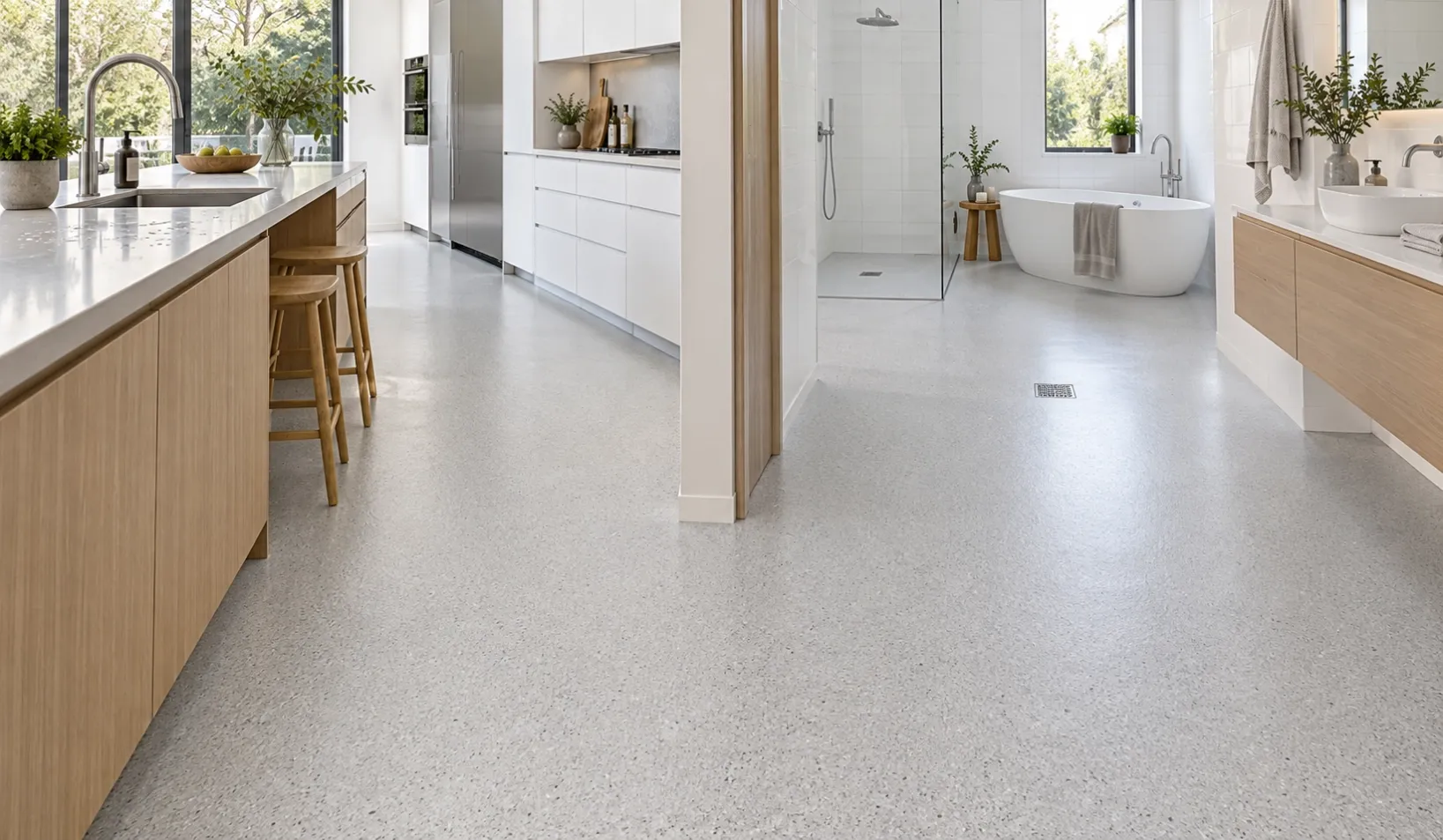
Epoxy Color Sand Flooring for Kitchens and Bathrooms
Kitchens and bathrooms need floors that are easy to clean, visually attractive, and suitable for regular exposure to water, spills, grease, and cleaning products.
Epoxy color sand flooring can meet these needs when it is applied over a sound, dry, stable, and properly prepared substrate. It creates a continuous decorative surface without the repeated exposed grout joints found across a tiled floor.
JUKE Epoxy Color Sand Self-Leveling can also be applied directly over suitable existing tiles. This allows many kitchen and bathroom floors to be renovated without complete tile demolition.
Suitability depends on floor condition, moisture, drainage, slip resistance, and installation.
Quick Answer
Epoxy color sand can be used on many kitchen and bathroom floors because it provides:
- A waterproof, seamless floor surface
- A slip-resistant mineral texture
- Easier cleaning without repeated grout lines
- Direct application over suitable existing tiles
- No separate primer on suitable dense, non-porous tiles
- A self-leveling mineral finish
- A choice of decorative colors
It should not be expected to repair loose tiles, active leaks, incorrect drainage slopes, or structural movement. These problems must be corrected before application.
Why It Works Well in Kitchens
Kitchen floors are exposed to food spills, grease, water, foot traffic, and frequent cleaning. Traditional grout joints may darken or collect residue when they are not maintained correctly.
Epoxy color sand forms a continuous surface across the main floor area. The lack of repeated grout lines gives the room a cleaner visual appearance and removes many of the recesses where debris can collect.
Its mineral pattern offers more visual depth than a simple solid-color coating and can complement modern residential or commercial interiors.
For a kitchen renovation, inspect areas near sinks, dishwashers, refrigerators, cooking equipment, and entrances. Leaks, oil contamination, damaged grout, and loose tiles require particular attention.
Why It Works Well in Bathrooms
Bathrooms benefit from a waterproof, seamless floor that is easy to clean and provides a slip-resistant mineral texture.
The cured epoxy matrix binds the colored sand and mineral fillers into a dense, continuous surface. Water does not pass between loose sand particles because the decorative aggregate is fully incorporated into the resin system.
However, a bathroom is more than its visible floor finish. Floor drains, pipe penetrations, wall-to-floor transitions, movement joints, and the underlying waterproofing arrangement must all remain correctly detailed.
Can It Be Applied Directly Over Bathroom or Kitchen Tiles?
Yes, when the existing tiles provide a reliable substrate.
Suitable tiles must be:
- Firmly bonded
- Structurally stable
- Clean and degreased
- Dry
- Properly prepared
- Reasonably flat
Loose, hollow, broken, or moving tiles should be repaired before coating. Deep joints, missing grout, cracks, and major depressions also require correction.
Smooth or glazed tiles should be mechanically prepared to create a suitable surface profile. Grinding dust must then be removed thoroughly.
On suitable dense, non-porous tiles, the JUKE system does not require a separate primer. Porous repair areas or other substrate conditions may require a different preparation approach.
Zero Demolition in Occupied Properties
Removing existing tiles can create noise, dust, broken material, and waste-disposal work. It may also expose the underlying substrate to additional repair.
When the tiled floor is sound, direct-to-tile application retains that base. This can help control disruption in homes, hotels, restaurants, and rental properties.
Zero demolition does not remove the need for preparation. Inspection, cleaning, repairs, surface treatment, and moisture control still determine the quality of the finished floor.
Seamless Does Not Mean There Are No Joints Anywhere
Epoxy color sand creates a seamless main surface without repeated decorative grout joints. Required expansion and movement joints must still remain functional.
Transitions around drains, thresholds, walls, cabinets, and penetrations need deliberate detailing. Covering an active movement joint as if it were an ordinary grout line may lead to cracking.
Plan the application boundary before mixing. Masking must not block drainage or necessary movement details.
Drainage and Floor Slope
Self-leveling describes how the wet material settles after it has been distributed. It does not automatically create a new drainage slope.
If a bathroom floor already drains correctly and remains structurally sound, the finished system should follow the prepared substrate. If water currently collects in low areas, those areas need to be evaluated and corrected before coating.
Around a floor drain, control the material carefully so that the drain height and flow path remain suitable. Do not allow the coating to obstruct the drain opening.
Projects requiring a new slope or drain connection need a complete installation plan.
Is It Suitable Inside a Shower?
The cured epoxy color sand surface is waterproof and slip-resistant, making it suitable for properly designed bathroom floor applications.
The substrate, required membrane, drain, slope, corners, penetrations, movement details, and flooring must work together. Active leaks, defective drains, incorrect slopes, and damaged waterproofing beneath the substrate must be repaired before application.
Local building requirements and the complete shower design should be checked before using any finish inside a continuously wet shower area.
JUKE epoxy color sand is intended for floors only and is not suitable for walls.
Slip Resistance in Wet Areas
The fine mineral texture of epoxy color sand provides a slip-resistant surface suitable for kitchens and bathrooms.
Water, soap, oil, and grease should still be removed promptly. Keeping the floor clean and drainage areas clear helps maintain safe everyday use.
No specific slip-resistance grade is stated because the finished result can be affected by application, surface condition, contamination, and maintenance.
Coverage and Material Planning
A 20 kg JUKE set, including Part A and Part B, covers approximately 10 m² or 108 square feet.
Actual coverage depends on tile-joint depth, surface profile, floor flatness, application thickness, repairs, and installation loss. Kitchens with fixed cabinets and islands should be measured according to the actual coating boundary.
For irregular bathrooms, divide the floor into smaller rectangles and add the areas together. Round the calculated quantity up to complete factory-matched sets and consider whether the floor condition requires additional material.
The current recommended application thickness is 1.0–2.0 mm, with an allowable deviation of ±0.2 mm.
Installation and Curing
Prepare all tools and application sections before mixing. Combine the complete factory-matched Part A and Part B and mix mechanically until the material is uniform.
Pour and distribute the material with a suitable notched trowel or long-handled spreading tool. Installers should work from the uncoated area and should not kneel or stand in wet material.
Under suitable conditions, the JUKE TDS lists a surface-dry time of approximately 4–6 hours and a hard-dry time of approximately 24 hours. Light pedestrian traffic is allowed after approximately 48 hours.
Keep the floor protected from water, cleaning, dust, and traffic during the initial curing period. Actual curing can vary with temperature, humidity, thickness, ventilation, and mixing accuracy.
Cleaning and Maintenance
Remove loose abrasive debris before mopping. Use compatible cleaning products and avoid tools that may scratch the finish.
Wipe up grease, soap, and standing water promptly, especially near cooking areas, sinks, baths, and drains. Inspect edges, penetrations, and damaged areas as part of routine maintenance.
Correct cleaning helps preserve the floor and reduce slip risks.
Frequently Asked Questions
Is epoxy color sand flooring waterproof?
Yes. When correctly mixed, applied, and cured, it forms a waterproof, seamless floor surface.
Is it slip-resistant?
Yes. Its fine mineral texture provides slip resistance suitable for kitchens and bathrooms. No specific slip-resistance grade is stated.
Does it cover existing grout lines?
Stable shallow joints can be covered. Deep, damaged, or missing joints should be repaired and leveled first.
Is a primer required over existing tiles?
No separate primer is required on suitable dense, non-porous tiles after correct preparation.
Can it repair a leaking bathroom floor?
No. Active leaks, defective drains, and moisture below the substrate must be corrected before application.
Can it be applied to bathroom walls?
No. JUKE epoxy color sand is designed for flooring and is not suitable for walls.
Does it need an additional topcoat?
The standard JUKE system forms the finished floor without requiring an additional topcoat. Any special project requirement should be evaluated separately.
A Practical Renovation Option
Epoxy color sand can provide kitchens and bathrooms with a seamless mineral appearance, easier cleaning, and a practical route for renovating suitable existing tiles.
The best results depend on a sound substrate, careful preparation, correct drainage details, suitable slip resistance, accurate mixing, even application, and adequate curing.
For distributors, tile suppliers, bathroom retailers, renovation contractors, and e-commerce sellers, the system creates a differentiated flooring option supported by factory-direct supply, OEM packaging, and marketing materials.