
Aug 25, 2026Applications
How to Renovate Commercial Floors Without Full Demolition
Renovate suitable commercial floors without full demolition using a seamless, self-leveling epoxy colored sand system applied directly over existing tiles or concrete.
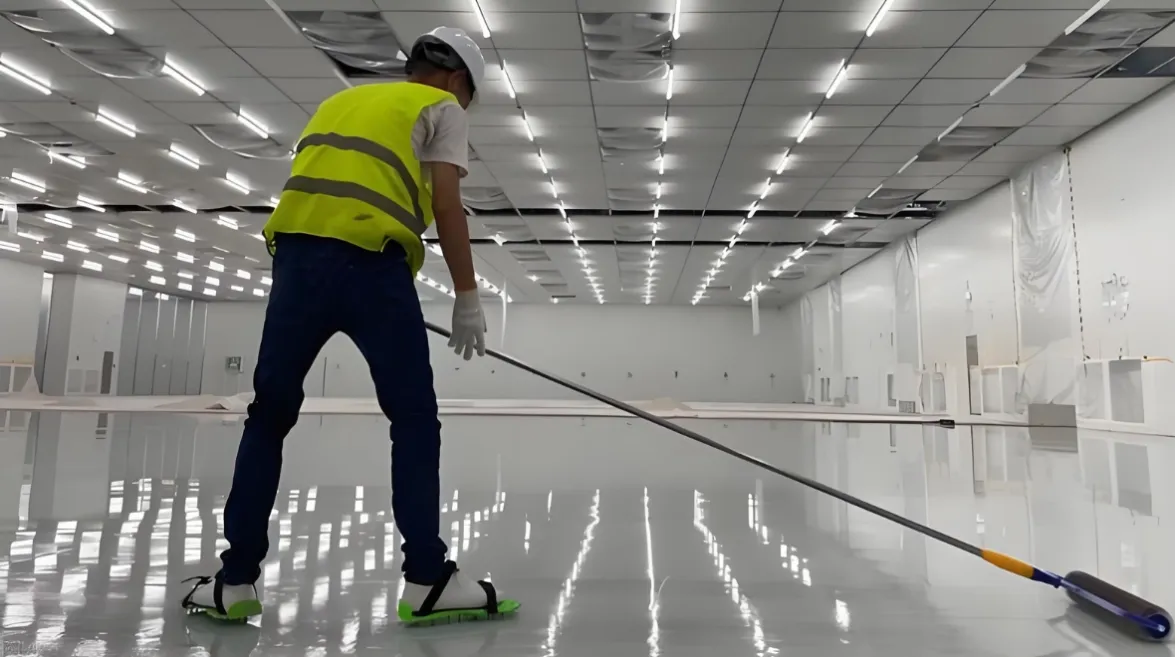
How to Renovate Commercial Floors Without Full Demolition
Commercial floors can often be renovated without removing the existing surface. When old tiles, concrete, or terrazzo are stable, dry, clean, and properly prepared, a self-leveling epoxy colored sand system can be applied directly over the substrate without a separate primer.
This zero-demolition approach reduces unnecessary removal work, construction waste, and disruption. However, the existing floor must be inspected carefully before application. Loose tiles, excessive moisture, major cracks, or unstable substrates must be repaired first.
Why Traditional Commercial Floor Renovation Takes So Long
Traditional renovation usually involves several separate stages:
- Breaking and removing the existing floor
- Transporting and disposing of demolition waste
- Repairing or rebuilding the substrate
- Waiting for the new base to become ready
- Installing the final flooring system
For retail stores, showrooms, hotels, offices, and other operating commercial spaces, these additional steps can extend downtime and disrupt normal business.
A direct-over-floor renovation method removes the demolition stage when the existing substrate is suitable, making the project easier to manage.
Can Commercial Floors Be Renovated Without Removing Existing Tile?
Yes. Sound and well-bonded tiles can be covered without demolition.
Before application, the floor should be checked for:
- Hollow or loose tiles
- Cracks and damaged joints
- Oil, wax, dust, or other contamination
- Excessive moisture
- Uneven areas or major height differences
Loose sections must be removed or repaired. Cracks and low areas should also be corrected before coating.
For concrete substrates, the concrete strength should be at least C20, and the substrate moisture content should not exceed 8%.
Learn more about the conditions required for applying epoxy flooring directly over existing tiles in our guide: Can You Apply Epoxy Flooring Directly Over Existing Tile?
How the Zero-Demolition Renovation Process Works
1. Inspect the Existing Floor
Confirm that the substrate is structurally sound and firmly bonded. Identify hollow tiles, cracks, moisture problems, oil contamination, and uneven sections.
Zero demolition does not mean covering a defective floor without preparation.
2. Repair Damaged Areas
Repair cracks, loose tiles, holes, and low areas with a suitable repair material. The final substrate should be stable and sufficiently level.
3. Grind and Clean the Surface
Remove dirt, grease, wax, loose particles, and other contaminants. The surface must be clean and dry before application.
A separate primer is not required for the JUKE Epoxy Colored Sand Self-Leveling System when the substrate meets the required conditions and is prepared correctly.
4. Mix Part A and Part B
JUKE supplies Part A and Part B in the correct factory-prepared proportion. Mix the complete components thoroughly for 2–3 minutes until the color and consistency are uniform.
Do not change the supplied mixing proportion.
5. Pour and Spread
Pour the mixed material onto the prepared floor and spread it evenly with a 3 mm notched trowel.
The recommended application thickness is approximately 1.0–2.0 mm. The material then self-levels to form a continuous, seamless surface.
6. Allow the Floor to Cure
Protect the completed area for the first 24 hours.
According to the JUKE 2026 Technical Data Sheet:
- Surface dry: 4–6 hours
- Hard dry: 24 hours
- Light pedestrian traffic: after 48 hours
- Vehicle traffic: after 72 hours
Actual curing can be affected by temperature, humidity, ventilation, and site conditions.
Where This Renovation Method Works Best
The system is designed primarily for indoor flooring applications such as:
- Retail stores
- Shopping malls
- Showrooms
- Hotels
- Offices
- Exhibition halls
- School corridors
- Hospital floors
- Garages
- Workshops and suitable industrial areas
Project requirements should still be reviewed before installation, especially where there is continuous chemical exposure, heavy impact, substrate movement, or special slip-resistance requirements.
Key Performance Requirements for Commercial Floors
Commercial flooring must provide more than an attractive finish. It must also withstand regular foot traffic, cleaning, abrasion, and daily operational use.
According to the JUKE 2026 TDS, the Epoxy Colored Sand Self-Leveling System provides:
- Mohs hardness: Level 8
- Compressive strength: ≥80 MPa
- Solid content: approximately 98%
- VOC content: 16 g/L
- Water impermeability: watertight at 0.4 MPa for 2 hours
- Heat resistance: no flowing or bubbling below 80°C
- Low-temperature flexibility: no cracking at −20°C
The completed surface is seamless and self-leveling, with a marble-like decorative appearance. No additional topcoat is required under the standard system described in the TDS.
How Much Material Is Required?
One 24 kg set covers approximately 12 square meters at the recommended application thickness.
For example, a 5,000 sq ft commercial floor is approximately 465 square meters:
465㎡ ÷ 12㎡ per set ≈ 39 sets
This is a theoretical estimate. Actual consumption may increase because of substrate roughness, unevenness, application loss, or site conditions. Final quantities should be confirmed after inspecting the floor.
When Should You Not Cover the Existing Floor?
Direct application is not suitable when the existing floor has unresolved structural or moisture problems.
Do not proceed until corrective work has been completed if the floor contains:
- Loose or hollow tiles
- Active or severe cracks
- Standing water or excessive substrate moisture
- Oil or chemical contamination
- Weak or powdering concrete
- Significant movement or instability
- Large uneven areas that have not been repaired
Covering an unstable substrate does not solve the underlying problem. Correct inspection and preparation are essential to the performance of the finished floor.
Commercial Floor Renovation FAQ
Does the existing tile need to be removed?
Not when the tiles are firmly bonded, dry, stable, and properly prepared. Loose or hollow tiles must be repaired before application.
Is a primer required?
No separate primer is required for the JUKE system when it is applied to a suitable and correctly prepared substrate.
Is the finished floor seamless?
Yes. The material self-levels to create a continuous surface without conventional tile joints.
How soon can the renovated floor be used?
The area should remain protected for 24 hours. Light pedestrian traffic is permitted after 48 hours, and vehicle traffic after 72 hours under suitable curing conditions.
Can the system be customized for distributors or project suppliers?
Yes. JUKE provides factory-direct supply, OEM color and packaging options, marketing support, and a low wholesale MOQ of 36 sets.
Check Whether Your Commercial Floor Is Suitable
A successful zero-demolition renovation begins with the condition of the existing floor.
Send JUKE Materials photos of the substrate, the project area, and the application requirements. Our team can help evaluate whether the floor is suitable and estimate the required quantity.
Contact JUKE Materials to request technical information, samples, wholesale pricing, or OEM support.