
Oct 10, 2026B2B & Sourcing
How to Evaluate an Epoxy Floor Coating Supplier Before a Bulk Order
Evaluate an epoxy floor coating supplier through consistent specifications, representative samples, batch traceability, packaging and technical support before committing to a wholesale order.
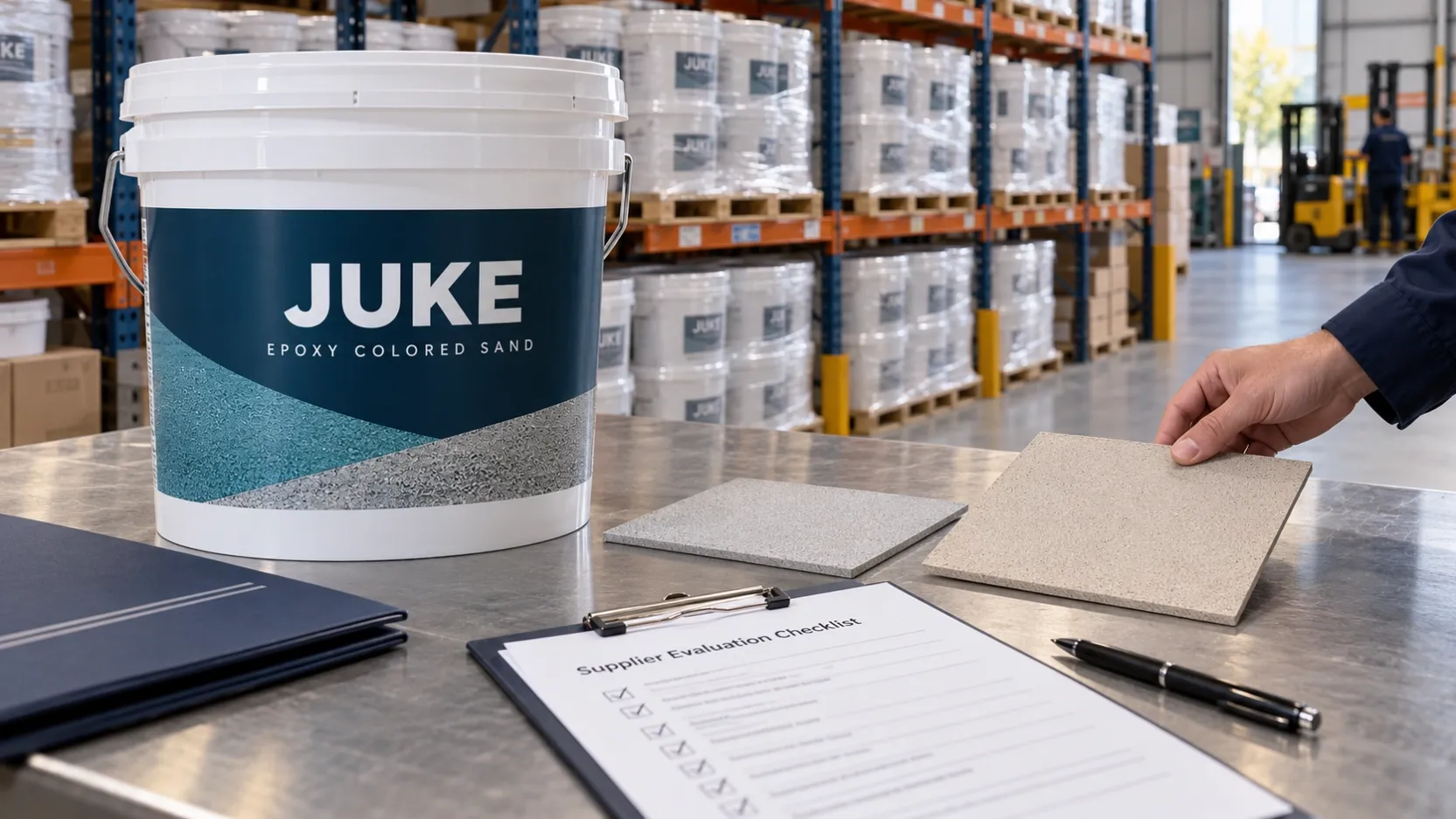
How to Evaluate an Epoxy Floor Coating Supplier Before a Bulk Order
To evaluate an epoxy floor coating supplier, check whether its product specifications, samples, packaging and support provide a consistent basis for purchasing and resale.
A competitive quotation is only one part of the decision. Distributors also need to know what will arrive, how customers should install it and how the supplier will investigate a problem.
Before placing a bulk order, use the following checks to turn a supplier’s promises into clear purchasing requirements.
1. Confirm Exactly Which System You Are Buying
“Epoxy floor coating” can describe different products. A quotation may cover a thin coating, a decorative self-leveling system or materials for a multilayer installation.
Ask the supplier to identify the complete system in writing.
Confirm the product name, components, mixing ratio, application method, coverage and preparation requirements. Establish whether primers, decorative materials or topcoats are included or supplied separately.
For example, JUKE Epoxy Colored Sand Self-Leveling is a two-component decorative system. Part A incorporates colored sand, fillers and pigments; Part B is the hardener. The factory-matched mixing ratio is 8:1 by weight.
Clear identification helps prevent comparisons between quotations with different contents.
Supplier check | Evidence to request | Purchasing purpose |
|---|---|---|
Product identity | Named system and component list | Confirm what the order includes |
Application requirements | Current instructions and technical data | Prepare accurate customer guidance |
Sample relevance | Sample identification and evaluation record | Connect the trial to the proposed order |
Batch traceability | Batch numbers and production records | Investigate future questions |
Packaging | Label artwork and packing details | Confirm handling and resale information |
Support | Technical contact and issue-reporting process | Establish how problems will be addressed |
2. Check Whether the Documents Agree
Review the quotation, technical data sheet, safety data sheet, application instructions and label together.
Look for inconsistent mixing ratios, set weights, coverage figures or substrate requirements. Ask the supplier to resolve differences before ordering.
Identify the document version that applies to your purchase. Keep the approved documents with the order record so your sales team and customers use the same information.
Preparation instructions deserve particular attention.
For JUKE, suitable tiles must be firmly bonded, stable, clean and dry. Under those conditions, demolition, grinding and primer are not required. Concrete requires mechanical grinding, repairs where necessary and a compatible epoxy primer.
A general “no primer” statement should therefore be qualified by substrate.
3. Make the Sample Evaluation Representative
A sample can help assess appearance and application, but record the conditions under which it was tested.
Confirm whether the sample represents the product proposed for the bulk order. Record its color, batch identification where available, substrate, preparation, mixing procedure and application conditions.
During the trial, assess practical questions:
- Can the installer follow the instructions clearly?
- Are the components straightforward to identify and mix?
- Does the material produce the expected finish?
- Does actual consumption support the quantity estimate?
- What additional guidance would customers need?
A small appearance sample and a site installation trial answer different questions. Choose the evaluation format according to what your business needs to establish.
Retain photographs and notes to support the purchasing decision.
4. Ask How Bulk Production Is Controlled
Ask the supplier how it checks production and release of the product.
Useful questions concern component weights, batch identification, color control, retained samples and checks performed before dispatch.
Request an explanation of the supplier’s actual process. Do not assume that a general “quality checked” statement covers every property important to your customers.
If test reports are supplied, review the product identification, test method and issuing organization. Clarify whether the report applies to the exact formulation and system being offered.
For continuous decorative areas, discuss batch planning and material allocation before installation. Set realistic appearance expectations using approved samples and documented application procedures.
5. Establish Batch Traceability
Traceability gives both businesses a starting point when investigating an issue.
Confirm how the supplier identifies the production batch, manufacturing date and component pairing. Check whether these details remain accessible after resale.
Distributors should retain the purchase record, received batch numbers and customer delivery records. Where practical, connect project complaints to the material supplied.
If a customer reports soft material, unexpected color or poor adhesion, a batch reference helps organize the investigation. Installation conditions and preparation records are also necessary; a visible problem alone does not establish its cause.
Agree on what evidence the supplier needs before the first order.
6. Review Packaging and OEM Labels
Packaging should help customers identify and handle the product correctly.
Before approving an order, confirm set contents, net weight, component identification, storage information and packing arrangements.
For OEM orders, approve the artwork in writing. Check that your branding does not obscure essential mixing, application or safety information.
JUKE offers custom labels for channel partners. The standard colored sand set is currently 20 kg, covering approximately 10 m² at a typical consumption of 2 kg/m². Actual coverage depends on surface condition and application losses.
Align the label, online listing and installation instructions so customers receive consistent information.
7. Define Technical Support Before You Need It
Ask who will answer installation questions and how your team should submit them.
A useful support process should identify the information needed to review a problem: product and batch details, substrate condition, preparation, mixing, temperature, timing and photographs.
Also clarify how the supplier handles suspected product defects, transport damage and installation-related issues. Record any agreed claim procedure and supply terms.
For distributors, practical training and accurate marketing materials matter alongside troubleshooting. Your staff should be able to explain where the product fits, estimate quantities and recognize when technical assessment is required.
JUKE provides application guidance and marketing support for channel partners.
8. Use the First Order to Test the Partnership
A trial order can evaluate more than the flooring material.
Check whether the supplier dispatches the agreed products, provides consistent documents, follows the approved packaging and responds to questions clearly.
Use customer and installer feedback to refine your sales materials before expanding the range.
JUKE’s minimum order is 36 sets, with mixed colors available. Distributors can use a trial pallet to assess selected colors and applications before planning larger purchases.
Frequently Asked Questions
What should I request before placing a bulk order?
Request the complete system specification, current technical and safety documents, application instructions, packing details and written supply terms.
Is an attractive sample enough to approve a supplier?
It establishes only part of the evaluation. Also review application, documentation, production controls, packaging and support.
Why are batch numbers important?
They help connect supplied material with production records and organize investigations when questions arise.
Can JUKE support private-label distributors?
JUKE offers OEM labels and marketing support, with a minimum order of 36 sets.
Evaluate JUKE for Your Flooring Range
JUKE supplies factory-direct epoxy colored sand self-leveling flooring for distributors, wholesalers, tile suppliers and retail channels.
Share your sales channel and intended applications to discuss product documents, samples, OEM labels and a trial order.