
Sep 6, 2026Epoxy Color Sand
Private Label Epoxy Color Sand Flooring: A Buyer’s Guide
Learn how to source private label epoxy color sand flooring, including packaging, samples, MOQ, technical documents, marketing support, and first-order planning.
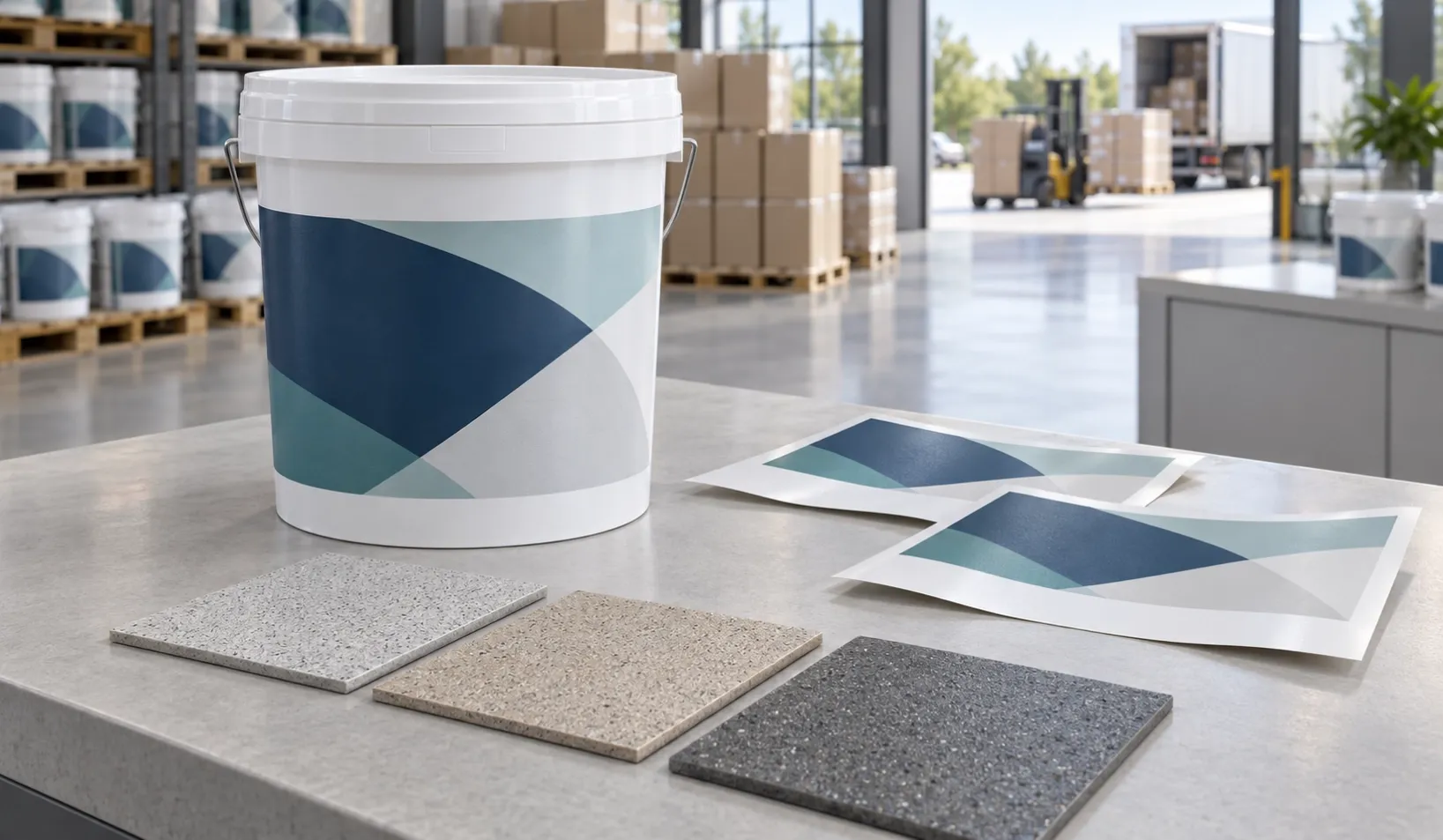
Private Label Epoxy Color Sand Flooring: A Buyer’s Guide
Private label epoxy color sand flooring allows distributors, tile suppliers, wholesalers, and e-commerce sellers to offer a decorative renovation system under their own brand.
The opportunity starts with a clear customer need: updating suitable existing tile floors without complete demolition.
JUKE Epoxy Color Sand Self-Leveling combines direct-to-tile application, a seamless mineral appearance, and factory-matched components. On suitable prepared dense tiles, the system requires no separate primer and follows a Mix–Pour–Spread application process.
Successful private labeling requires more than a new bucket label. Buyers also need consistent product information, clear application instructions, suitable packaging, and a practical plan for selling and supporting the product.
What Does Private Label Mean?
Private labeling means supplying a manufacturer's product with the buyer's agreed branding and packaging presentation.
For epoxy color sand flooring, this may involve a branded bucket label, agreed color selection, product naming, and supporting sales materials.
A branded label does not automatically mean a different formulation. Buyers should distinguish between branding an established system and requesting changes to its chemistry, finish, or packaging format.
JUKE supports OEM and private-label cooperation. The exact scope should be confirmed before artwork is printed or production is scheduled.
Who Is This Product For?
The system can fit businesses that already serve floor renovation customers:
- Flooring material distributors
- Decorative concrete suppliers
- Building material wholesalers
- Tile suppliers
- DIY flooring retailers
- Shopify and other e-commerce sellers
Tile suppliers can introduce it as an additional renovation option when customers want to retain sound existing tiles. Decorative concrete suppliers can add a mineral-look flooring system to their range. Online sellers can explain the application through short demonstrations and clear product-page content.
The strongest fit is a business that can help customers assess the floor, select the material quantity, and understand the installation process.
1. Define the Product Positioning
A private-label range needs a clear reason for customers to choose it.
For JUKE, the main positioning is:
Zero demolition. Direct over suitable tiles. No separate primer on suitable dense tiles. Self-leveling decorative flooring.
This message should appear consistently across the bucket label, product page, sales presentation, and application video.
Avoid presenting the product as suitable for every substrate without inspection. Existing tiles must be stable, clean, dry, and prepared according to the approved instructions. Loose areas and significant defects need correction.
A focused renovation message is easier to explain than a long list of unrelated industrial performance claims.
2. Confirm What Each Set Contains
The standard 20 kg set includes Part A and Part B in factory-matched quantities. The 20 kg refers to their combined net weight.
When the complete set is used, the installer combines the supplied components and mixes thoroughly. There is no need to calculate a new ratio for the full set.
Approximate coverage is 10 m², or 108 square feet, per 20 kg set. Actual coverage depends on the substrate, application thickness, joints, and installation loss.
Use the same figures on the label, carton, quotation, website, and customer instructions. Conflicting coverage figures create unnecessary questions and can lead to underordering.
3. Evaluate Samples Before Selecting the Range
For wholesale and private-label buyers, samples help assess the product before committing to inventory.
Review both the cured appearance and the application process. Check the selected color under lighting similar to the intended sales environment.
Useful evaluation points include:
- Color and mineral pattern
- Surface appearance and feel
- Mixing and spreading behavior
- Compatibility with the intended prepared substrate
- Clarity of the supplied instructions
Agree on a reference sample for the selected color. Photographs and screen images are useful for initial selection, but they should not be treated as exact color standards.
If different colors are included in the first order, record each color and quantity clearly.
4. Prepare Clear Packaging Artwork
The bucket label should help the customer identify and use the product.
Plan space for the product name, set weight, component information, color identification, application summary, storage instructions, and appropriate safety information.
A QR code can connect the customer to an application video or product information page. Test the link and confirm that the destination describes the exact supplied system.
Distinguish the main branding label from any separate color-and-weight sticker used on the bucket lid. Both should agree with the order details.
Before printing, confirm the label shape, dimensions, material, and placement against the actual bucket. Artwork that looks correct on a flat screen may need adjustment when applied to a curved container.
5. Align Technical Documents and Sales Copy
Request the current Technical Data Sheet and Safety Data Sheet for the supplied product.
Technical documents, labels, videos, and sales pages should describe the same system. A preparation step should not appear as mandatory in one document and disappear from another without explanation.
Check that your content consistently explains:
- What Part A and Part B contain as a supplied set
- Which substrates are suitable
- What preparation is required
- When a separate primer is unnecessary
- How mixing and spreading work
- How coverage should be estimated
- What curing and storage instructions apply
Use documented performance claims. Do not add unsupported guarantees about lifespan, scratch resistance, waterproofing, or installation speed.
6. Plan a Manageable First Order
JUKE supports wholesale trial orders starting from 36 sets.
For private-label orders, confirm whether the selected artwork, printing method, packaging changes, or other customization affects the minimum quantity, cost, or production schedule.
The first order should answer practical questions: which colors sell, which customer groups respond, and what support buyers need.
A focused range can make inventory, product photography, and customer guidance easier to manage. Discuss available color combinations before finalizing the order.
A trial order also does not automatically establish exclusive distribution rights. Any territory or exclusivity arrangement should be discussed separately.
7. Request Marketing Support You Can Use
JUKE offers marketing support, including product photos and application videos.
Choose materials that match your sales channel. A distributor may need sample displays and a concise product sheet. An online seller may need installation clips, close-up finish images, coverage guidance, and answers to common questions.
Useful content should show:
- The condition of the existing floor
- The preparation required
- Mixing the supplied components
- Pouring and spreading with the correct tool
- The finished mineral surface
Marketing should demonstrate the process clearly. Avoid editing videos in a way that suggests preparation or curing can be skipped.
8. Compare the Complete Supply Offer
Factory-direct sourcing provides a direct commercial relationship with the manufacturer, but buyers should still compare the full offer.
Confirm the product specification, branding scope, quantities, packaging, freight responsibilities, technical support, and arrangements for addressing order discrepancies.
A low unit price alone does not explain the quality of the documentation, consistency of the supplied system, or usefulness of the marketing materials.
If you already sell epoxy coatings, clarify how this product will fit your range.
Frequently Asked Questions
Can I sell JUKE epoxy color sand under my own brand?
JUKE supports private-label and OEM cooperation. Confirm the branding and packaging requirements before ordering.
Is the curing agent included in the 20 kg set?
Yes. The set weight includes the supplied Part A and Part B together.
What is the starting wholesale quantity?
Wholesale trial orders start from 36 sets. Confirm any additional requirements for your chosen customization.
Does private labeling require a new formula?
No. Branding an established product and developing a modified formulation are different requests.
Can JUKE provide application videos and photos?
Yes. Marketing materials are available to support product explanation and sales. Confirm the assets needed for your channel.
Discuss Your Private-Label Requirements
Prepare your target market, sales channel, preferred colors, initial quantity, and packaging requirements before requesting an OEM proposal.
This gives JUKE the information needed to discuss a practical first order and suitable sales support.
With factory-direct supply, OEM options, marketing support, and a low starting wholesale quantity, JUKE offers a way to introduce zero-demolition epoxy color sand flooring under your own brand.