
B2B & Sourcing
Epoxy Flooring Suppliers Australia: Sourcing Guide
Sourcing epoxy flooring suppliers in Australia? Learn what to check — MOQ, OEM terms, samples, and shipping to Australian ports — before you order.
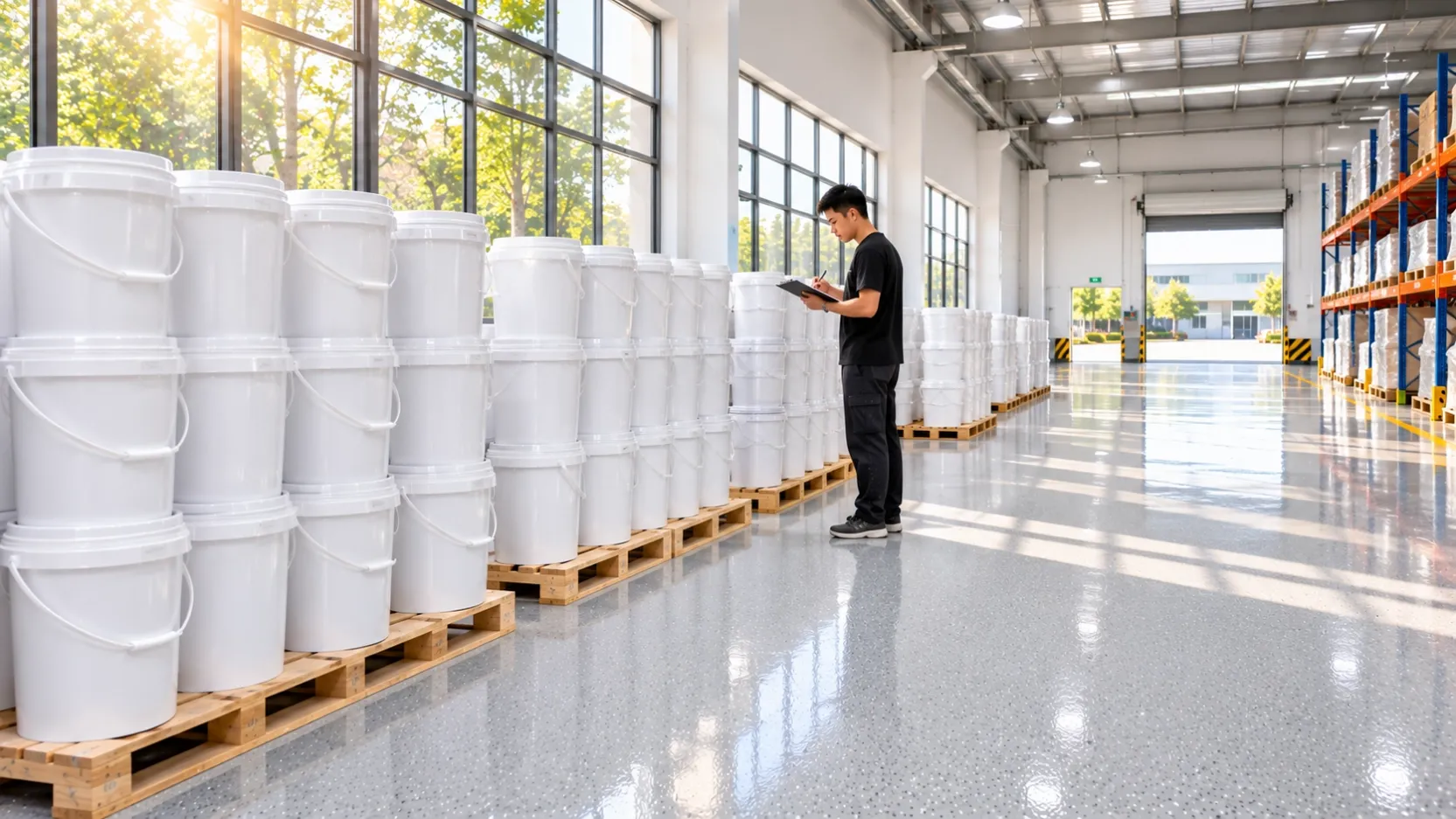
Australian flooring contractors, builders, and resellers who need epoxy flooring in volume usually import factory-direct: the local market is supplied largely by importers and distributors, and buying from the factory cuts out a layer of margin and gives access to OEM and private-label options. This guide explains what Australian buyers should check in a supplier — MOQ, samples, shipping to Australian ports, and suitability for Australian conditions — before placing an order.
Why Australian buyers import factory-direct
There are three practical reasons. First, the factory controls the formulation, the colors, and the packaging, so custom requests — an exclusive color, your own bucket label — are handled in production. Second, a single factory often supplies several systems (colored sand self-leveling, flake flooring, stone flooring, tile grout, repair putty), so one supplier can cover a full flooring range. Third, export to Australia is routine for established manufacturers: pallet and container shipments, CIF quotes to Australian ports, and the documents a customs broker needs — commercial invoice, packing list, bill of lading, TDS, and SDS.
The risk is the same as in any import: choosing a supplier on price alone and discovering the product, the documents, or the support do not match. The checks below are how you avoid that.
What to check in a supplier
A serious factory can show you:
- A full TDS with test numbers. For JUKE's epoxy colored sand self-leveling system: ~98% solids, 16 g/L VOC, ~10 m² coverage per 20 kg set at 1.5–2.0 mm, ≥80 MPa compressive strength, Mohs 8 hardness, ~20 minutes working time, foot traffic ~48 hours, vehicle traffic ~72 hours. Vague claims without numbers are a warning sign.
- An SDS for both components.
- Production evidence — factory photos or video, not only rendered product images.
- A MOQ tied to production — for JUKE, 48 sets (one pallet) for the flagship system.
- Custom colors — a factory can develop an exclusive color for a distributor; a reseller cannot.
Ask directly whether the supplier produces the resin and the colored sand system itself, and whether it can make a custom color for your brand. If the supplier cannot answer technical questions from production experience, it is likely a trading company — which is not disqualifying, but it cannot change a formula or develop a color for you.
MOQ and order sizes
Minimum orders are set by the pallet. JUKE's MOQ is 48 sets — one pallet — with mixed colors allowed on the pallet, so a first order can cover several colors without committing to a full container.
A 20 ft high-cube container holds 880 sets. For an Australian distributor planning warehouse space, the pallet is the unit to think in: one pallet footprint per 48 sets, and a container load is roughly 18 pallets. Start with a trial pallet, confirm the product sells and installs well in your market, then scale to container quantities.
OEM and private label for Australian brands
OEM and private label mean the factory makes the product and it carries your brand: your logo and brand name on the bucket labels and packaging. JUKE offers 12 standard colors — Milky White, Sesame Gray, Dark Gray, Cream Gray, Sky Blue, Titanium Blue, Stone Gray, Coral Red, Emerald Green, Light Beige, Light Green, Ivory Pink — and can develop a custom exclusive color for a distributor's brand.
For an Australian brand, private label is what turns an imported product into your product: your customers see your name, your colors, and your documentation. Confirm the branding scope in writing before ordering — what is printed, what documentation carries your brand, and what the MOQ is for custom colors and packaging.
Sample first: test before you commit
Never place a bulk order on a TDS alone. JUKE provides a free 1 kg sample; the customer pays the courier freight. Use the sample to test the things that matter on a real job: coverage on your substrate, working time in your conditions, cure, color, and finish.
For Australian buyers, the sample test should also cover your local conditions — a hot-day pour behaves differently from a mild-day pour, because higher temperatures shorten the ~20-minute working time. Test the sample the way your crew will actually install it, on the substrates you actually meet: tiles and concrete, not just a lab board.
Shipping to Australian ports
JUKE quotes CIF to the destination port by default: ocean freight and insurance to your port are included. The main Australian container ports for flooring imports are Sydney, Melbourne, Brisbane, Perth, and Adelaide — confirm with your forwarder which port suits your warehouse, since inland delivery from the port is the buyer's responsibility, along with customs clearance and port charges.
Two things to confirm before booking freight:
- Dangerous-goods status. Epoxy systems have two components, and the hardener is usually the one with transport restrictions. JUKE's A component (resin + colored sand) has passed non-dangerous-goods identification; the B hardener is the component your forwarder needs to check. Confirm the DG position before booking.
- Documents. Your customs broker will need the commercial invoice, packing list, bill of lading, TDS, and SDS. Confirm the supplier provides all of them with the shipment.
Duties, taxes, and clearance costs depend on the shipment value and the current tariff schedule — your broker or forwarder quotes those, not the factory. Ask for the quote before you order so there are no surprises at the port.
Australian conditions: heat, sun, and indoor use
Australia's climate affects both installation and service, and it is worth planning for:
- Application temperature is 5–35 °C, with relative humidity at or below 85%. On a hot Australian day, the working time shortens — schedule pours for the cooler part of the day and size the crew for a faster sequence.
- Indoor use is the system's home. Garages, showrooms, retail spaces, offices, and warehouses are the standard applications.
- Outdoor use needs a UV-protective topcoat. The color will slowly fade in direct sun without one, so for outdoor or sun-exposed areas, confirm a compatible UV topcoat and check suitability for the actual exposure. Do not assume all outdoor conditions are suitable.
- Substrate moisture must be ≤8%. Australian slabs vary — test, especially on grade and in humid coastal areas.
Local building and product requirements vary by state and project type. If your project needs specific compliance documentation, raise it with the supplier before ordering, and check the requirement with your building certifier or local authority.
Comparing quotes fairly
When comparing suppliers, compare the material cost per square metre — not the set price alone. A 20 kg set covering ~10 m² has a very different cost per square metre than the same set stretched over a smaller area, and thickness matters too: compare every quote at the same 1.5–2.0 mm build and the same coverage basis.
Also compare the trade terms: a CIF quote to your Australian port includes ocean freight and insurance; an EXW quote does not include any freight at all. Two quotes at different terms are not comparable until the freight is added. Our cost guide explains the per-square-metre calculation step by step, with worked examples.
Because JUKE is a factory, pricing is quoted per order — it depends on volume, colors, packaging, and destination. Request a factory quote for your quantities and port, and the price will be exact.
FAQ
What is the minimum order for Australia?
48 sets — one pallet — with mixed colors allowed. A 20 ft high-cube container holds 880 sets.
How is epoxy flooring shipped to Australia?
Usually CIF to your destination port — ocean freight and insurance included. Your forwarder handles customs clearance, port charges, and delivery beyond the port. Confirm the hardener's dangerous-goods position with your forwarder before booking.
Can I sell it under my own brand in Australia?
Yes. JUKE supports OEM and private label: your brand on the buckets and packaging, 12 standard colors or a custom exclusive color developed for you.
Does it suit Australian heat?
Install between 5 °C and 35 °C; hot days shorten the ~20-minute working time, so plan pours for cooler hours. The cured floor resists heat with no flowing or bubbling below 80 °C, and no cracking at −20 °C. Outdoor areas need a compatible UV-protective topcoat.
How do I check quality before ordering?
Request the TDS and SDS, then order a sample and test it yourself: coverage, working time, cure, color, and finish. JUKE provides a free 1 kg sample; you pay the courier freight.
Next step
If you are sourcing epoxy flooring for the Australian market, start with the documents and a sample: request the TDS and SDS, test the product on your substrates, and check the supplier against the list above. When you are ready, request a factory quote — and tell us your port and quantities so the quote is exact.