
Sep 16, 2026Technical & Installation
Can Epoxy Color Sand Be Applied Over Concrete Floors?
Learn when epoxy color sand can be applied over concrete, how to prepare porous or dense substrates, when primer may be needed, and how to achieve a seamless finish.
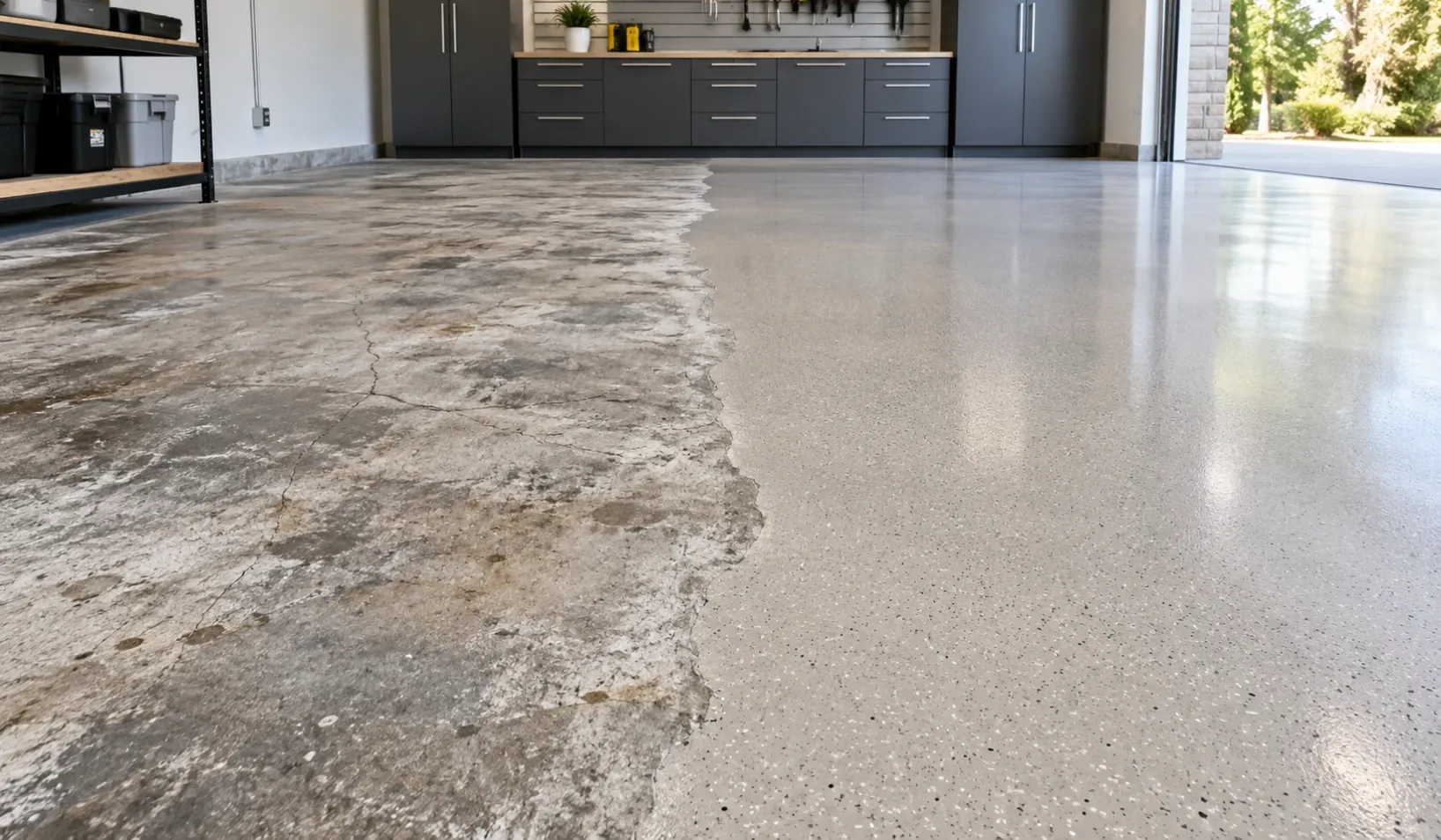
Can Epoxy Color Sand Be Applied Over Concrete Floors?
Concrete is one of the most common substrates for epoxy flooring, but not every concrete floor should be treated the same way.
A smooth, dense concrete surface behaves differently from an old porous slab. Moisture, cracks, dusting, unevenness, and surface contamination can all affect the final result.
JUKE Epoxy Color Sand Self-Leveling can be applied over suitable concrete floors, but the key to a successful installation is understanding the condition of the existing substrate before application.
For contractors, distributors, and property owners, the most important question is not simply:
“Can epoxy color sand go over concrete?”
The better question is:
“Is this concrete floor ready for an epoxy color sand system?”
Can Epoxy Color Sand Go Directly Over Concrete?
Yes. Epoxy color sand can be applied over concrete when the substrate is structurally sound, dry, clean, and properly prepared.
The concrete floor should not contain loose material, heavy dust, oil contamination, unstable repairs, or active cracks.
Unlike suitable dense tile surfaces, however, some concrete floors are highly porous.
Porous concrete can absorb resin unevenly or release air from the substrate during application. In these situations, additional substrate treatment or a primer may be required before the self-leveling layer is installed.
This is why concrete floors should always be evaluated before deciding whether a primer can be omitted.
Why Concrete Condition Matters
Concrete may look solid from above while still containing problems that affect a new flooring system.
Common issues include:
- Surface dusting
- Small cracks
- Holes and pitting
- Oil contamination
- Uneven areas
- Excess moisture
- Weak surface laitance
- High porosity
If these problems are covered without preparation, they may affect adhesion, surface appearance, or durability.
The epoxy system bonds to the concrete surface underneath it. If that surface is weak, loose, or contaminated, the new coating cannot compensate for the unstable substrate.
This is why proper preparation is one of the most important parts of concrete floor renovation.
Step 1: Inspect the Existing Concrete
Before application, inspect the entire floor.
Look for:
- Cracks
- Loose areas
- Oil or grease
- Previous coatings
- Dusting concrete
- Uneven sections
- Holes
- Moisture problems
Small surface defects can usually be repaired before coating.
However, major structural movement, severe moisture problems, or unstable concrete should be addressed before installing any resin flooring system.
A good finished floor starts with a stable substrate.
Step 2: Grind and Clean the Surface
Concrete should be mechanically prepared to remove weak surface material, contamination, and loose particles.
Grinding helps expose a stronger and cleaner concrete surface while improving the bond between the substrate and the epoxy system.
After grinding, dust should be removed thoroughly.
Oil, grease, wax, curing compounds, and other contaminants must also be cleaned from the floor.
A floor that looks clean can still contain fine dust after grinding, so proper vacuuming and cleaning should not be skipped.
Step 3: Repair Cracks and Surface Defects
Cracks, holes, and damaged areas should be repaired before applying epoxy color sand.
This is especially important for self-leveling systems because the final decorative layer follows the condition of the substrate underneath.
If deep defects are left untreated, they can increase material consumption and reduce the quality of the finished surface.
The objective is not necessarily to make the concrete perfectly smooth before application.
The objective is to create a solid, stable, dry, and reasonably level substrate.
Does Concrete Need a Primer?
Sometimes.
This is one of the main differences between concrete and dense surfaces such as ceramic tile.
A sound, dense tile floor may allow direct application after proper preparation.
Concrete, however, can vary significantly in porosity.
A highly porous concrete floor may absorb part of the epoxy system or release trapped air as the coating cures. This can contribute to bubbles, pinholes, or an inconsistent surface.
For porous concrete, a suitable epoxy primer or sealing layer can help:
- Seal surface pores
- Reduce air release from the concrete
- Improve substrate consistency
- Support more uniform application
Therefore, the correct message is not simply “no primer.”
For concrete floors, primer requirements should be determined by the actual condition and porosity of the substrate.
What About Smooth or Dense Concrete?
Dense, smooth concrete may require less sealing than highly porous concrete, but surface preparation is still essential.
A very smooth concrete surface should generally be mechanically prepared before application.
The purpose is to remove contamination and create a suitable profile for adhesion.
Even when a primer is not required, this does not mean the product should be poured onto untreated concrete.
No primer and no preparation are not the same thing.
How Is JUKE Epoxy Color Sand Applied?
Once the concrete substrate has been properly prepared, application is straightforward.
1. Prepare the Floor
Repair cracks and damaged areas.
Grind and clean the concrete.
Make sure the surface is dry and free from dust, oil, and loose material.
2. Prime or Seal if Required
Evaluate the porosity of the concrete.
If the floor is highly porous, apply the appropriate substrate treatment before the main layer.
3. Mix the Material
Mix Part A and Part B thoroughly until the material becomes uniform.
4. Pour the Material
Pour the mixed material onto the prepared floor.
Do not leave mixed epoxy in the bucket longer than necessary because the curing reaction begins after mixing.
5. Spread the Material
Use a notched trowel to distribute the material evenly.
Recommended Application Thickness
The JUKE system is typically applied at approximately 1.8–2.0 mm for the self-leveling layer.
Actual material consumption will depend on:
- Concrete flatness
- Surface porosity
- Existing defects
- Repair requirements
- Final application thickness
An uneven or heavily damaged concrete floor will consume more material than a smooth, well-prepared slab.
How Much Epoxy Color Sand Is Needed?
JUKE's current export specification is 20 kg per set, covering approximately 10 m² under typical application conditions.
For example:
A 50 m² concrete floor would require approximately five 20 kg sets under normal conditions.
However, this should be treated as an estimate.
Rough, porous, or uneven concrete may require additional material.
Contractors should always inspect the floor before calculating the final order quantity.
How Long Does the Floor Need to Cure?
Typical curing times are:
- 4–6 hours: surface dry
- 24 hours: hard dry
- 48 hours: light pedestrian traffic
- 72 hours: vehicle traffic
Temperature and humidity can affect curing time.
The floor should remain protected during the initial curing period.
For garages, workshops, and other areas exposed to vehicles, sufficient curing time should be allowed before traffic resumes.
Why Use Epoxy Color Sand Instead of Leaving Bare Concrete?
Bare concrete is functional, but it can create several maintenance and appearance problems.
Depending on the slab, untreated concrete may:
- Produce surface dust
- Absorb oil and stains
- Be difficult to clean
- Look unfinished
- Contain visible repairs and color variations
Epoxy color sand creates a continuous decorative layer over the concrete surface.
The finished floor combines a seamless appearance with the mechanical performance of an epoxy-based flooring system.
JUKE Epoxy Color Sand provides:
- Compressive strength ≥80 MPa
- Mohs hardness Level 8
- Approximately 98% solid content
- Seamless surface
- Self-leveling application
- Decorative mineral appearance
This makes the system suitable for concrete floor renovation where appearance and durability are both important.
Where Can It Be Used?
Suitable concrete applications can include:
- Garages
- Shops
- Showrooms
- Offices
- Commercial interiors
- Workshops
- Corridors
- Residential spaces
The actual substrate condition should always be checked before installation.
For renovation projects, epoxy color sand can provide a new decorative surface without rebuilding the entire floor structure.
A Practical Product for Flooring Distributors
Concrete flooring is already familiar to contractors and flooring suppliers, which makes epoxy color sand relatively easy to introduce as a renovation product.
The sales proposition is simple:
Prepare the existing concrete and create a new seamless decorative floor without installing tiles or another separate flooring layer.
For flooring distributors, decorative concrete suppliers, contractors, and online sellers, JUKE provides:
- Factory-direct supply
- OEM and private label options
- Marketing photos and videos
- Application support
- Low MOQ starting from 36 sets
This gives partners an additional product category for both residential and commercial floor renovation projects.
Final Thoughts
Epoxy color sand can be applied over suitable concrete floors, but the quality of the substrate determines how the floor should be prepared.
The most important steps are simple:
Inspect the concrete. Repair defects. Grind and clean the surface. Evaluate porosity. Use a primer when the substrate requires it.
Once the concrete is properly prepared, JUKE Epoxy Color Sand Self-Leveling can create a seamless, durable, and decorative new surface.
Looking for epoxy color sand for concrete floor renovation? Contact JUKE for samples, wholesale pricing, OEM options, and technical support.