
Oct 10, 2026B2B & Sourcing
Epoxy Flooring vs Polished Concrete: A Distributor’s Selection Guide
Compare epoxy flooring and polished concrete by substrate requirements, appearance, installation, project costs and channel opportunities to help distributors select the right solution.
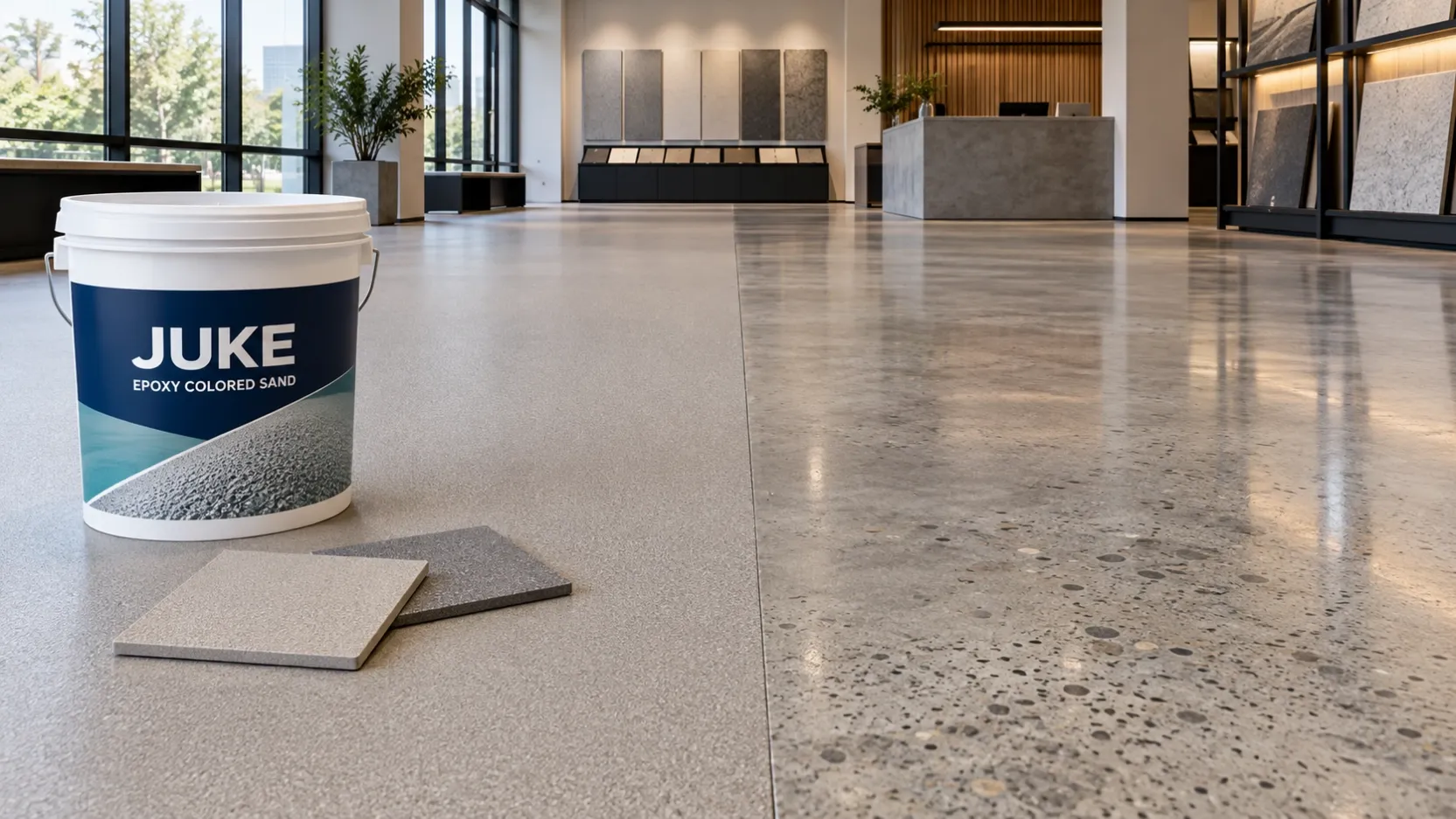
Epoxy Flooring vs Polished Concrete: A Distributor’s Selection Guide
Epoxy flooring creates a new resin-based surface over a prepared substrate. Polished concrete refines the concrete slab itself through mechanical processing. For distributors, the choice depends on the existing floor, the desired appearance, installation resources and the needs of the customers they supply.
Both options deserve consideration. A customer seeking exposed concrete may prefer polishing. A customer seeking a new decorative finish—or renovation over suitable existing tiles—may be better served by an epoxy flooring system.
This guide explains the differences that matter when selecting products, advising buyers and building a flooring portfolio.
What Is the Difference Between Epoxy Flooring and Polished Concrete?
Epoxy flooring is a broad category that includes thin coatings, self-leveling systems and decorative finishes. Specifications vary, so distributors should compare complete systems rather than treating every epoxy product as interchangeable.
JUKE Epoxy Colored Sand Self-Leveling combines epoxy resin and colored quartz sand to create a continuous decorative surface. Its factory-prepared two-component system is mixed before application and spread across a suitable substrate.
Polished concrete uses mechanical processing to refine the concrete surface to a specified finish. Aggregate exposure and gloss are separate selection factors, so “polished concrete” does not describe one uniform appearance.
Selection factor | JUKE epoxy colored sand flooring | Polished concrete |
|---|---|---|
Basic approach | Applies a new decorative layer | Refines the existing concrete slab |
Appearance | Colored mineral finish | Appearance influenced by the concrete and aggregate |
Suitable existing tiles | Can remain when firmly bonded, clean and dry | Concrete must be accessible for polishing |
Concrete preparation | Mechanical grinding, repairs and compatible epoxy primer | Assessment, repairs and specified polishing process |
Installation resources | Mixing and application tools, preparation equipment where required | Concrete polishing equipment and tooling |
Main channel opportunity | Supplying a packaged renovation system | Supplying contractors with polishing products and consumables |
Start With the Existing Floor
The substrate should be the first question in any comparison.
Existing Tile Floors
For a tiled showroom, shop or residential interior, exposing the concrete beneath the tiles introduces removal work before concrete polishing can begin.
JUKE offers another route: applying the colored sand system directly over suitable existing tiles. The tiles must be firmly bonded, stable, clean and dry. Under those conditions, JUKE does not require tile demolition, grinding or primer.
This gives tile suppliers and building material wholesalers a clear renovation proposition: retain a suitable tiled base and create a new decorative surface.
Loose tiles, contamination and movement still require assessment. Zero-demolition renovation depends on the condition of the existing floor.
Existing Concrete Floors
Both options require assessment of the concrete.
For JUKE, concrete requires mechanical grinding and a compatible epoxy primer. Cracks, holes and uneven areas should be repaired before application. Self-leveling behavior does not replace substrate repair.
Concrete intended for polishing may also need surface repairs. The Concrete Polishing Council identifies spalls, scratches, pinholes and cracks among the defects that can require attention before polishing.
Distributors should explain these requirements before quoting materials. Preparation work can materially change the project budget.
Compare the Appearance Customers Expect
Polished concrete can appeal to customers who want the character of an exposed concrete slab. However, aggregate type, distribution and the depth of processing influence the final appearance. The Concrete Polishing Council recommends an approved mock-up on the actual slab to establish expectations.
An applied decorative epoxy system offers a different design approach. Buyers select the coating color and finish instead of relying primarily on the appearance of the underlying concrete.
JUKE’s colored sand system produces a fine mineral appearance with a generally matte-to-satin finish. It should be presented using representative samples and installation photographs.
For distributors, the practical question is: does the customer want to reveal the existing concrete, or introduce a new decorative surface?
Compare Total Project Costs
Neither option is automatically cheaper.
A useful comparison includes the work needed to deliver the specified floor, rather than only the coating price or polishing rate.
For epoxy flooring, check:
- Substrate preparation and repairs.
- Primer requirements.
- Complete system contents and coverage.
- Application labor and material loss.
- Curing time and access restrictions.
For polished concrete, request a quotation that identifies repairs, the specified aggregate exposure and finish, processing work, protective treatments and access arrangements.
A suitable tiled floor may give JUKE an opportunity to avoid tile removal costs. On exposed concrete, preparation and project requirements may produce a different comparison.
JUKE’s current standard 20 kg set covers approximately 10 m² at a typical consumption of 2 kg/m². Actual coverage varies with surface condition, flatness and application losses.
Evaluate the Opportunity for Your Sales Channel
The commercial opportunity differs by customer type.
Flooring distributors and building material wholesalers can assess JUKE as an additional decorative renovation product. Suitable tile renovation provides a distinct application story alongside existing flooring ranges.
Decorative concrete suppliers may consider both categories. Polishing products serve customers who refine exposed slabs, while epoxy systems serve customers who apply a new surface.
Tile suppliers can introduce an overlay option for buyers who want to renovate a suitable floor without replacing the tiles.
DIY flooring retailers and e-commerce sellers should provide clear instructions, substrate requirements and installation expectations. A packaged system still needs careful preparation, accurate mixing and controlled application.
For JUKE, the channel offer includes factory-direct supply, a minimum order of 36 sets, OEM labels and marketing support. These features help distributors evaluate a trial order and prepare their sales materials.
What Should Distributors Check Before Ordering?
Request the current technical data sheet, safety data sheet, application instructions and representative samples.
Confirm what is included in each set, which substrates are supported, when primer is required and how coverage is calculated. Check packaging, storage requirements and the installation support available to your customers.
Also define the intended use. “Commercial flooring” alone does not establish suitability for every traffic level, chemical exposure or cleaning regime. Compare documented requirements for the actual project.
Frequently Asked Questions
Is epoxy flooring better than polished concrete?
The better choice depends on the substrate, appearance and project requirements. Polished concrete suits customers seeking an exposed concrete finish. Decorative epoxy suits customers seeking an applied surface with selected colors and textures.
Can polished concrete be installed over existing tiles?
Polishing concrete requires access to a concrete surface. Suitable existing tiles can instead be retained as the base for JUKE’s direct-to-tile system.
Does JUKE require primer?
Suitable, firmly bonded, clean and dry tiles do not require primer. Concrete requires mechanical preparation and a compatible epoxy primer.
Can distributors sell both solutions?
Yes. The categories address different project needs. Distributors should provide separate specifications, preparation guidance and quotations for each.
Discuss a Wholesale Flooring Order With JUKE
JUKE supplies factory-direct epoxy colored sand self-leveling flooring for distributors, wholesalers, tile suppliers and retail channels. Start with a 36-set trial pallet and discuss OEM labels, samples and marketing support.
Share your sales channel and typical flooring projects so we can help you assess the product fit.